Large breasts can cause neck and shoulder pain, be bothersome during exercise, and cause other discomforts. A breast reduction offers a solution for aesthetic or medical reasons. Now, you might have a question: how large and visible will the scar be after surgery?
Unfortunately, a scar is inevitable after a breast reduction. However, you can influence the final appearance of the scar by preventing or reducing symptoms. Learn how
Why does a breast reduction cause scars?
A breast reduction causes scars because of the deep incisions that are made during surgery. You get a deep wound that also damaged your deeper skin layers. Your body wants to close this wound as quickly as possible to prevent infections and moisture loss. To do this, your body produces scar tissue to close the wound.
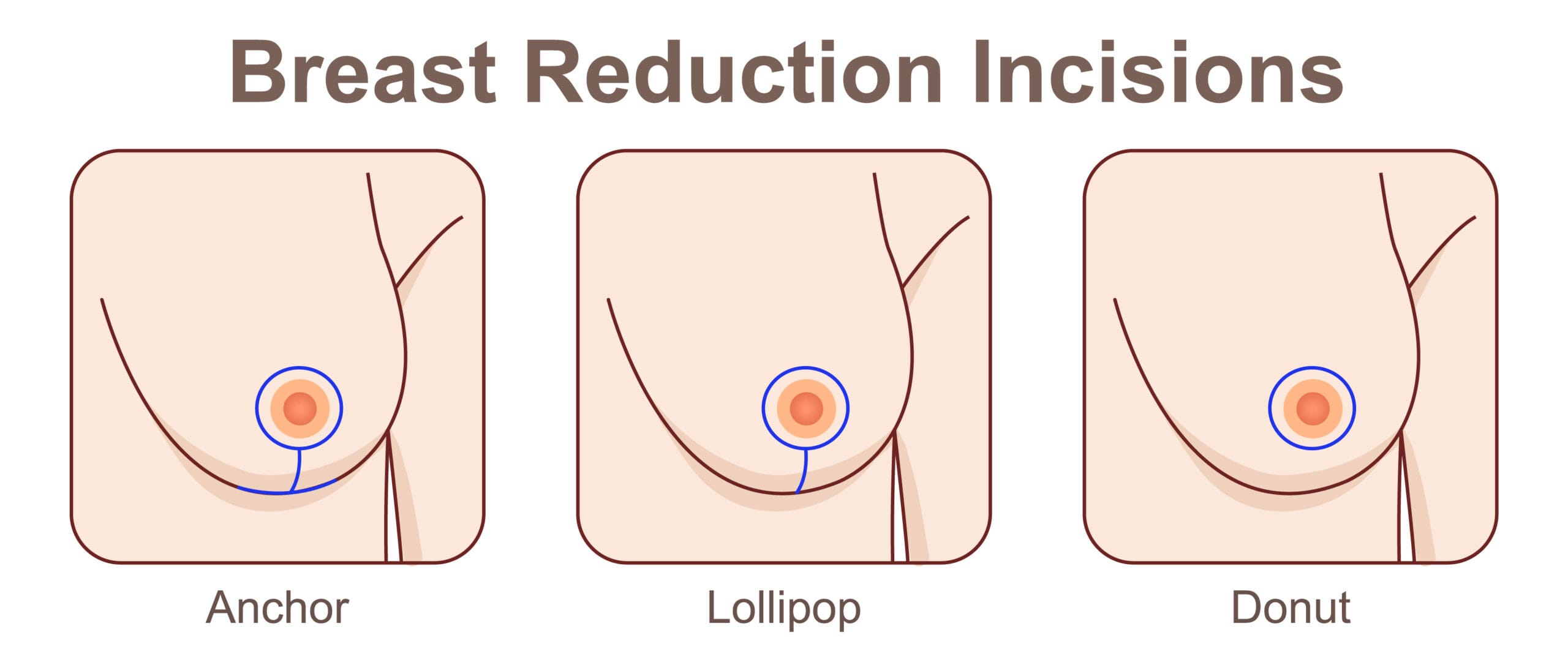
Where do you get scars after a breast reduction?
The location of your breast reduction scars depends on the method used:
What do breast reduction scars look like?
The incision that is made during your breast reduction surgery determines the location of your scar. What your scars eventually will look like depends on various factors. The most important is the type of scar it develops into.
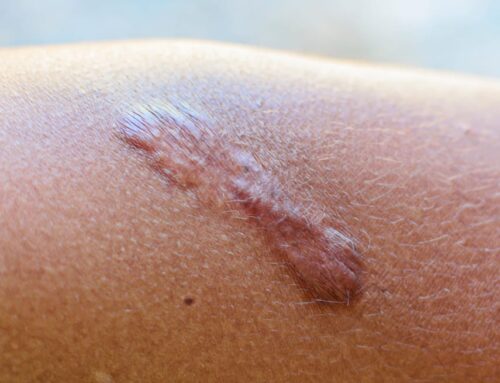
Your scars can develop into normal scars: thin, slightly lighter lines that are flush with the skin. This type of scar is ideal. However, breast reduction scars are likely to develop into an abnormal scar without proper treatment.
Abnormal scars:
Hypertrophic and keloid scars feel firmer, itch more, cause pain, pull on your skin and are far more visible than normal scars. These scars do not heal on their own and require treatment.
Proper scar treatment can also help prevent these types of scars. This is often recommended after a breast reduction because, just like every surgical scar, your breast reduction scars have a 50% chance of becoming hypertrophic, because the wound is that deep.
How to reduce and prevent breast reduction scars
While it is not possible to fully remove your breast reduction scars, you can influence the appearance of them. Scar treatment can reduce symptoms of scars such as redness, itching and more. It can also be used to prevent (hypertrophic) scars from forming.
The main goal in professional scar treatment is reducing moisture loss through the scar. Moisture loss is a major cause of scarring: the more moisture your damaged skin loses, the more scar tissue your body needs to produce. Retaining the moisture is also difficult for your scar tissue, because it has lost its barrier function.
Silicone scar sheets help to temporarily take over this barrier function. This protects your skin against moisture loss, resulting in:
These effects are scientifically proven, which is why silicone therapy is the most widely used method by scar treatment professionals.
Breast reduction scars after one year
With the proper scar treatment, your breast reduction scars can heal. After one to two years, they should be fully healed and no longer have the chance to develop into abnormal scars. Preventive scar treatment can be started as soon as your wounds have healed closed and are effective until your scars are fully healed. Treating your scars to reduce symptoms can show visual results after 6 months.
Silicone scar sheets for breast reduction scars
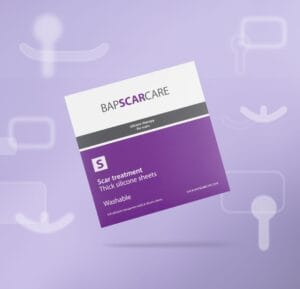
BAPSCARCARE silicone sheets are specially developed for breast augmentation surgeries. These silicone sheets are pre-shaped so they can easily be applied to your breast reduction scars. Based on the incisions that were made during the surgery, you can use/combine different shapes.