Scar tissue is a natural part of the body’s healing process. Whenever the deeper layers of the skin are damaged, for example by surgery, burns or an accident, the body repairs the wound by producing new connective tissue. This repair process is essential, but it often results in a visible scar.
Although scars are a normal outcome of wound healing, they can cause discomfort and cosmetic concerns. The good news is that with early and consistent treatment, you can significantly reduce symptoms and support optimal scar development.
Would you rather learn about scars visually? Watch the video below or continue reading!
What is scar tissue?
Scar tissue is connective tissue made primarily of collagen fibres. When the skin is deeply injured, the body rapidly produces large amounts of collagen to close the wound and protect it from infection.
This collagen is organised differently from normal skin. As a result, scar tissue:
The larger and deeper the wound, the higher the risk of a visible or raised scar.
Scars can develop anywhere on the body, including:
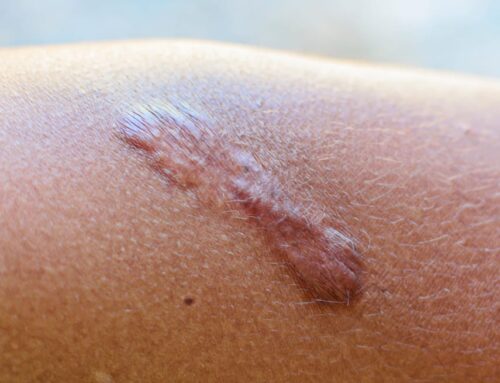
How does scar tissue look?
In the early stages, scar tissue is often:
Over time, a normal scar becomes flatter, paler and softer. However, some scars remain red, thick or raised. In certain cases, scar tissue grows excessively, forming a hypertrophic or keloid scar.
Can scar tissue cause pain?
Yes. Scar tissue can cause several physical symptoms, especially during the first two years when the scar is still active.
Common complaints include:
These symptoms occur because scar tissue has a disrupted skin barrier and loses moisture more easily. This dryness contributes to itching, irritation and discomfort.
Massaging the scar and keeping it well hydrated improves flexibility and reduces tightness and pain. Older scars also benefit from proper hydration and targeted scar therapy.
Why do scars form?
Scars form when the deeper layers of the skin are damaged. This can happen due to:
If only the top layer of the skin is affected, such as with a superficial graze, the skin heals completely without scarring.
If deeper layers are involved, the body cannot fully regenerate normal skin. Instead, it closes the wound quickly with scar tissue.
Certain factors increase the risk of abnormal scar formation. According to the step-by-step scar management guidelines, risk factors include:
For patients with risk factors, early preventive scar treatment immediately after wound closure is essential.
Can scar tissue be removed?
Scar tissue cannot be completely removed once it has formed. Even plastic surgery cannot restore the skin to its original, uninjured state.
However, this does not mean you cannot improve a scar.
A scar remains active for up to two years after wound closure. During this period, you have the greatest influence on:
Even mature scars can be softened and made less noticeable with the right treatment.
Proven treatments for scar tissue
The most effective and non-invasive scar treatments are silicone therapy and medical hydration therapy. These treatments are supported by international scar management guidelines and widely used by specialists.
Silicone therapy with BAPSCARCARE
BAPSCARCARE silicone sheets are a clinically proven technology for the treatment and prevention of hypertrophic and keloid scars.
They work by creating a semi-occlusive layer over the scar, which:
Early silicone therapy significantly reduces the risk of abnormal scarring.
Hydration therapy with ALHYDRAN
Optimal hydration is a cornerstone of scar management. A disrupted skin barrier leads to excessive moisture loss, which increases itching, redness and abnormal scar development.
ALHYDRAN is a medical hydrating cream specially developed for the treatment of a disrupted skin barrier after wound closure. Its effectiveness has been scientifically proven.
ALHYDRAN:
It combines humectants, emollients and occlusive ingredients to both hydrate and retain moisture. This dual action restores moisture balance and supports controlled scar maturation.
For scars exposed to sunlight, ALHYDRAN with high-level sun protection SPF 30 protects against harmful UVA and UVB radiation. UV protection is strongly recommended during scar maturation to prevent permanent discolouration of the skin.
Apply ALHYDRAN three times daily to closed skin for optimal results.
The best results come from combination therapy
For raised or symptomatic scars, combining silicone therapy with scar cream provides the strongest results.
This combination follows international scar management guidelines and is used in hospitals and burn centres worldwide.
Start early for the best outcome
Scar tissue cannot be erased, but it can be effectively managed. The first months after wound closure are crucial. Starting silicone therapy and medical hydration immediately after the wound has healed closed significantly improves long term results.
If you are unsure which treatment is most suitable for your scar, seek professional advice. Early, consistent and clinically proven scar care makes the difference between a problematic scar and a well healed one.