A thoracotomy or sternotomy is a major surgical procedure that requires an incision through the skin of the chest, side or back. Once the wound has healed, this leaves a surgical scar.
The location of a thoracotomy scar or sternotomy scar deserves particular attention. The chest and upper back are areas where there is considerable tension on the skin. Normal movements, including breathing, repeatedly place movement and tension around the healing tissue. This increases the risk of abnormal scarring and makes good scar care particularly important.
Why does surgery cause a scar?
A scar develops when an injury extends into the deeper layers of the skin. During surgery, the surgeon deliberately makes an incision through the skin to reach the underlying tissue. The body then repairs this damage by producing new connective tissue, primarily collagen.
This scar tissue differs from normal skin. During the first stage of healing, a surgical scar can be red, raised, firm or sensitive. It may also itch or feel tight.
The scar continues to develop long after the wound itself has closed. Scar development can remain active for up to approximately two years. This means that the appearance and symptoms of your scar can continue to change during this period.
Starting clinically proven scar treatment as soon as the wound is completely closed supports optimal scar development and helps reduce the risk of abnormal scarring.
Why do thoracotomy and sternotomy scars have an increased risk of abnormal scarring?
Surgery itself is an important risk factor for abnormal scar formation. Research has shown that hypertrophic scarring can occur in around 50% of scars following surgery.
The location of the incision also influences how a scar develops. Areas with greater skin tension are more susceptible to abnormal scar formation. A thoracotomy or sternotomy places the incision on the chest, side or back, where the skin is regularly subjected to movement and tension.
Breathing continuously moves the chest wall. Everyday movements involving the shoulders, arms and upper body can place additional tension on the surrounding skin.
Other factors can also influence scar development, including:
Having one or more risk factors does not mean that you will develop an abnormal scar. It does mean that early scar assessment and appropriate care are particularly important.
What is a sternotomy scar?
A sternotomy scar develops after an operation in which the surgeon accesses structures within the chest through the sternum or breastbone.
The most common approach is a midline sternotomy, also called a median sternotomy. The incision runs vertically along the centre of the chest, generally from the upper part of the sternum towards the lower end of the breastbone.
A midline sternotomy scar may therefore be relatively long and highly visible.
Midline sternotomy is commonly used for major cardiac procedures, including:
Because the incision is located on the chest, the resulting median sternotomy scar is in an area where skin tension can influence scar development.
What is a mini sternotomy?
Not every sternotomy requires a full-length incision.
For certain procedures, including some aortic valve operations, a surgeon may perform a mini sternotomy. Instead of extending along most of the sternum, this incision covers a shorter section of the chest and may curve into a J-shape.
Although the incision is smaller, it still damages the deeper layers of the skin. A mini sternotomy therefore still produces a surgical scar that should be monitored while it matures.
What is a thoracotomy scar?
A thoracotomy is an operation in which an incision is made through the chest wall to access structures within the chest.
The resulting thoracotomy scar is generally positioned along the side of the chest and may extend towards the back or front of the body depending on the surgical approach.
Thoracotomy may be used during procedures involving the lungs or pleural space, including:
The exact position and length of the scar depend on the procedure and surgical technique.
Posterolateral thoracotomy scar
A posterolateral thoracotomy is a traditional approach that provides extensive access to the chest cavity.
The incision generally runs from the back towards the side and front of the chest. As a result, a posterolateral thoracotomy scar, sometimes described as a posterior thoracotomy scar, can extend across a relatively large area of the upper body.
Because this area moves when you breathe and when you move your shoulder or upper body, the healing scar can experience repeated tension.
Anterolateral thoracotomy scar
An anterolateral thoracotomy approaches the chest from the front and side rather than from the back.
An anterolateral thoracotomy scar generally extends from the side of the chest towards the breastbone. The exact position depends on the operation and the structures the surgeon needs to access.
As with other surgical scars on the chest, the scar should be monitored for increasing redness, thickness, firmness and other signs of abnormal scar development.
Lateral and mini thoracotomy scars
A lateral thoracotomy scar is located predominantly along the side of the chest. Depending on the procedure, its exact position and length can vary considerably.
Less invasive surgical techniques may sometimes allow surgeons to use a smaller incision. This can result in a mini thoracotomy scar.
A smaller incision does not automatically mean that scar treatment is unnecessary. The scar still results from damage to the deeper layers of the skin and remains susceptible to abnormal scar development while it matures.
What does a normal thoracotomy or sternotomy scar look like?
A newly healed scar will not immediately look like your surrounding skin.
During the early stages of scar development, it is normal for a scar to appear red or pink and feel firmer than the surrounding skin. Mild itching, sensitivity and tightness may also occur.
With normal scar maturation, these characteristics gradually decrease. Ideally, the scar becomes:
This process takes time and can take up to 1.5 to 2 years. Even when the surgical wound has healed successfully, the scar tissue underneath continues to remodel.
How do you recognise an abnormal scar?
The two main types of raised abnormal scars are hypertrophic scars and keloids.
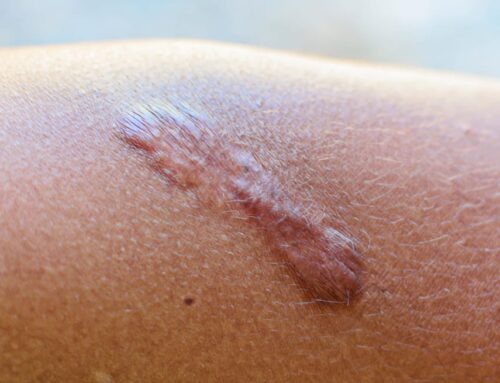
A hypertrophic scar becomes excessively thick, raised and firm but remains within the boundaries of the original wound. It may also remain red and cause itching, pain or a pulling sensation.
A keloid scar grows beyond the original boundaries of the wound. Keloids can continue to grow and do not normally resolve spontaneously.
Changes in your scar do not necessarily mean something is wrong with the surgical wound. However, early treatment is important when a scar begins developing abnormally.
How long does a thoracotomy or sternotomy scar take to heal?
Wound healing and scar maturation are two different processes.
The surgical wound closes first. Scar tissue then continues to develop and remodel for considerably longer.
It takes at least several months for a scar to normalise and scar maturation can continue for approximately 1.5 to 2 years. This is why the appearance of your thoracotomy or sternotomy scar after six months may differ considerably from how it looks after one or two years.
A scar can also become thicker, redder or more symptomatic several months after the wound has healed. Do not assume that scar treatment is unnecessary simply because the incision has already closed.
When should you start treating a thoracotomy or sternotomy scar?
Start scar treatment as soon as possible after complete wound closure.
Never apply silicone scar products to an open wound. Treatment should begin only when the wound has completely healed, sutures have been removed where applicable and any scabs have fallen off.
Starting at this stage allows you to support the scar while it is still actively developing.
If you are unsure whether your wound has healed sufficiently to begin scar treatment, ask your surgeon, doctor or specialist.
How can you treat a thoracotomy or sternotomy scar?
Clinically proven scar treatment focuses on restoring hydration, protecting vulnerable scar tissue and reducing the risk of excessive scar formation.
Two important non-invasive options are medical silicone therapy and specialised scar creams.
Silicone scar therapy
Medical silicone is widely used for the prevention and treatment of hypertrophic and keloid scars.
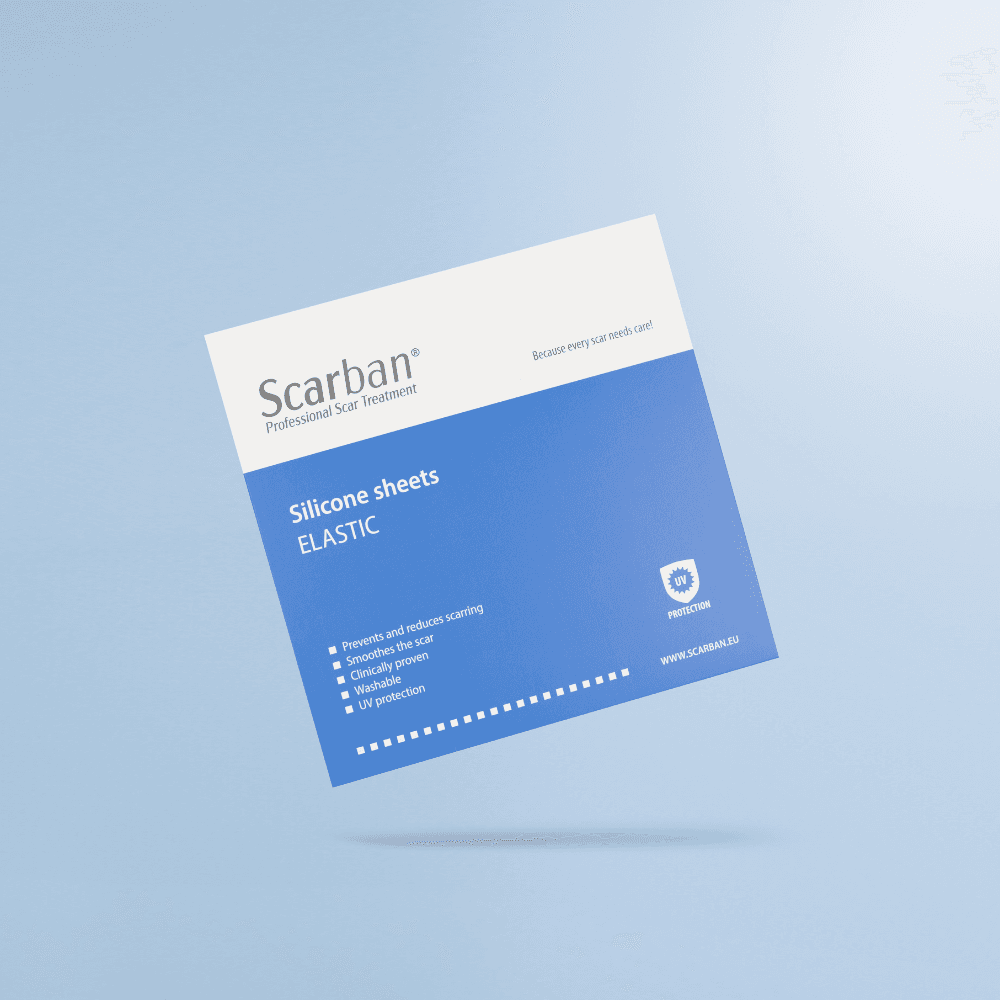
Silicone sheets form a semi-occlusive layer over the scar. This reduces excessive moisture loss and increases hydration of the epidermis. Clinically proven silicone sheets help scars become flatter, softer and thinner and reduce symptoms such as persistent redness, itching and tightness.
A long thoracotomy or midline sternotomy scar requires a silicone sheet that covers the entire scar and the surrounding skin. The silicone sheet should extend approximately 2 cm beyond the edges of the scar.
Hydrating scar cream
Good hydration is another important part of scar care.
Scarred skin has a disrupted skin barrier and can lose excessive moisture. A specialised medical cream such as ALHYDRAN combines hydration with moisture retention to support recovery of the disrupted skin barrier. Its effectiveness for scar care and disrupted skin has been clinically and scientifically investigated. ALHYDRAN can also be combined with silicone therapy.

Protect your scar from sunlight
New scar tissue is particularly vulnerable to UV radiation. Sun exposure can cause long-lasting changes in pigmentation, making the scar more noticeable.
Protect the scar from direct sunlight, particularly while it is still active. Depending on the treatment chosen, this can include clothing, a high sun protection factor or a silicone sheet with UV protection.
UV protection should remain an important part of scar care throughout scar maturation.
When should you seek medical advice?
Changes to a healing surgical wound should always be distinguished from normal scar development.
Contact your healthcare professional if you are concerned about the wound itself, particularly if it opens, becomes increasingly painful or shows signs of infection.
Once the wound has healed, seek professional advice if the scar:
This is particularly important if you have previously developed hypertrophic or keloid scars.
Give your thoracotomy or sternotomy scar time and the right care
A thoracotomy or sternotomy leaves a scar in an area where movement and skin tension can make scar development more challenging. Although the surgical wound may close within weeks, the resulting scar continues to change for many months afterwards.
Do not wait for a scar to become thick, raised or uncomfortable before considering scar care. Once the wound is completely closed, early and consistent treatment with clinically proven options such as silicone therapy and specialised scar hydration supports optimal scar development.
Continue monitoring your scar throughout the maturation period. If it becomes increasingly raised, red, painful or grows beyond the original incision, speak to your doctor or scar specialist.